
Blog
China Best Turf Football Shoes for Wholesale Buyers?
Choosing China’s best Turf Football Shoes for wholesale requires more than comparing factory prices. Buyers must examine traction, durability, fit consistency, and supplier reliability. A shoe that looks strong in product photos may feel stiff after one training session.
Simon Bartold, a respected footwear consultant, offers a useful principle: “Fit and function must come before fashion.” That advice matters on artificial turf, where short rubber studs must provide grip without creating excessive pressure under the foot. Buyers should request outsole samples, material specifications, size charts, and recent quality-control records. They should also test shoes on dry and slightly damp turf before confirming a large order.
Details matter.
Reliable Chinese manufacturers often provide several upper options, reinforced toe areas, breathable mesh, and flexible rubber outsoles. However, “best” depends on the target market. A budget academy shoe may need lasting comfort and easy cleaning. A premium match shoe may require lighter materials, tighter finishing, and more precise molding. Wholesale buyers should compare the landed cost, not only the factory quotation. Packaging, inspection, shipping, and possible defect replacements can change the final margin.
There is no perfect model.
Even experienced buyers sometimes trust attractive samples too quickly. That is a mistake worth reconsidering. A small trial order can reveal sizing problems, glue marks, weak stud attachment, or inconsistent color batches. This guide evaluates Turf Football Shoes through practical buying criteria, helping distributors choose products that perform reliably and support long-term customer trust.
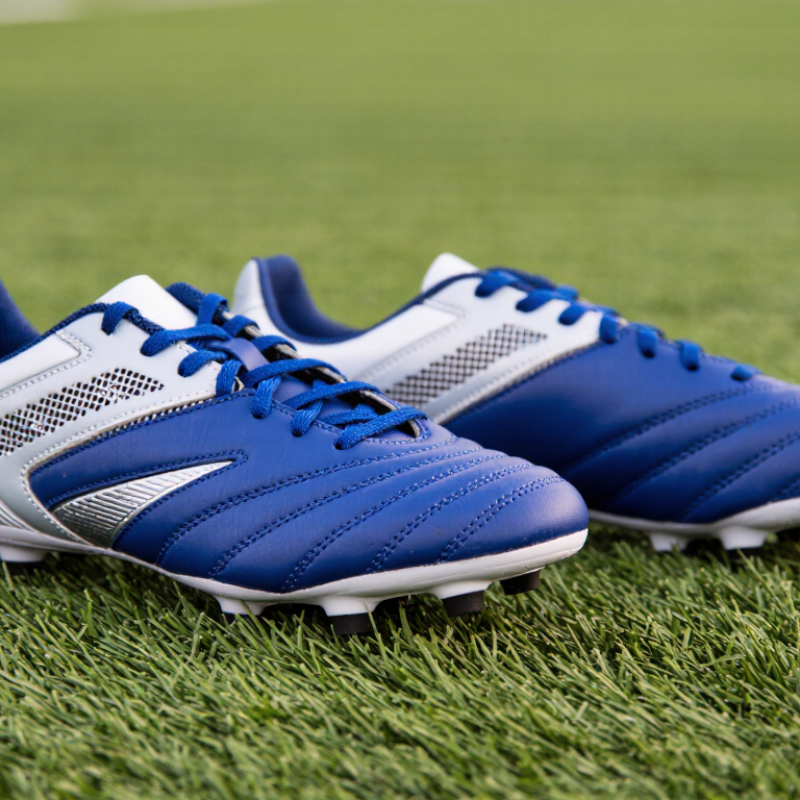
China Turf Football Shoes Defined: TF Soles for Short-Pile Artificial Grass
China Best Turf Football Shoes for Wholesale Buyers?
China Turf Football Shoes Defined: TF Soles for Short-Pile Artificial Grass
TF football shoes use many short rubber studs rather than long, widely spaced blades. This layout spreads pressure across the outsole and suits firm, short-pile artificial grass. On a compact pitch, the studs help maintain traction during quick turns without digging deeply into the surface. Feel the difference underfoot.
FIFA’s Quality Programme for Football Turf evaluates fields through tests including rotational resistance, shock absorption, and ball roll. These measures assess the playing surface, not a shoe’s performance, so buyers should not treat field certification as footwear certification. The distinction matters. Grand View Research estimated the global artificial turf market at USD 4.31 billion in 2022, indicating a broadening installed surface base, though this figure does not measure TF shoe demand. For wholesale selection, compare stud height, rubber hardness, outsole flexibility, and grip consistency across sizes. Test samples on the intended pitch when possible; dry showroom flooring can give a misleading impression. TF soles may also feel less secure on wet, tall-pile turf. There is no universal stud pattern that suits every artificial pitch.
| Evaluation Dimension | Recommended Wholesale Specification | Why It Matters for TF Turf Shoes | Practical Buyer Check |
|---|---|---|---|
| Intended Playing Surface | Short-pile artificial grass, commonly used for small-sided football and training pitches | TF footwear is designed to distribute traction across dense synthetic surfaces without relying on long, aggressive studs. | Confirm that the outsole is marked for turf or TF use rather than firm-ground or soft-ground use. |
| Outsole Pattern | High-density rubber outsole with many small, closely spaced rubber lugs | Numerous short lugs provide balanced grip and help reduce pressure points on hard artificial surfaces. | Review lug distribution across the forefoot, midfoot, and heel; avoid visibly uneven or poorly bonded areas. |
| Stud or Lug Height | Typically short rubber lugs, generally around 2–5 mm depending on the outsole design | Short lugs are suited to shallow artificial turf and are less likely to catch in the surface than longer molded studs. | Request an outsole drawing or physical sample because lug height can vary by model and size. |
| Upper Material | Textile, synthetic leather, microfiber, or a combination of lightweight synthetic materials | Upper construction affects ball touch, flexibility, durability, cleaning requirements, and retail price. | Check stitching, printed overlays, reinforcement zones, and resistance to repeated bending. |
| Toe Protection | Reinforced toe cap or abrasion-resistant overlay | Frequent toe dragging and contact with abrasive synthetic fibers can cause premature wear. | Inspect the toe seam, outsole wrap, and bonding line for consistent coverage. |
| Heel Counter | Structured heel counter with padded collar and secure heel hold | A stable heel fit can reduce internal foot movement during acceleration, turning, and sudden stops. | Check whether the heel counter returns to shape after compression and whether the collar padding is even. |
| Midsole Cushioning | Low-profile EVA or comparable foam cushioning integrated with the outsole | Short-pile turf can feel firm underfoot, so moderate cushioning supports comfort without making the shoe unstable. | Compare cushioning under the heel and forefoot; excessive softness may reduce ground feel. |
| Fit Profile | Secure football-specific fit with enough room for natural toe movement | A stable fit helps control the foot inside the shoe while avoiding unnecessary pressure during extended play. | Request a measurement chart in millimetres and test several representative sizes before bulk ordering. |
| Weight Target | Often approximately 220–330 g per shoe in adult sizes, depending on materials and size | Lower weight can support agility, while adequate reinforcement is still required for regular training and matches. | Define a permitted weight tolerance and specify the tested size when comparing samples. |
| Outsole Flexibility | Controlled forefoot flex with a stable midfoot and heel | Flexibility supports running and ball control, while excessive twisting can reduce support and durability. | Perform repeated flex tests and inspect whether the rubber separates from the upper. |
| Traction Balance | Multi-directional grip for acceleration, braking, and lateral movement | Small-sided football involves frequent changes of direction, requiring traction without excessive surface bite. | Test on the target turf type when possible; grip performance can change with pile length, infill, and moisture. |
| Breathability | Perforated synthetic panels, mesh zones, or breathable textile sections | Ventilation can improve comfort during training, especially in warm indoor or outdoor environments. | Check airflow zones without compromising upper strength around the toe and medial side. |
| Weather and Cleaning Use | Suitable for normal dry or moderately damp conditions, subject to the material construction | TF shoes are not automatically waterproof; wet turf may affect traction and upper performance. | Request care instructions and avoid marketing the shoes as waterproof unless verified by testing. |
| Durability Indicators | Consistent outsole rubber, reinforced high-wear zones, secure stitching, and uniform adhesive bonding | Durability influences return rates and total cost for teams, academies, and sports retailers. | Inspect the toe, medial forefoot, heel edge, and flex grooves after repeated wear simulation. |
| Size Range for Wholesale | Adult ranges commonly cover approximately EU 36–47; youth ranges may extend below EU 36 | A broad size offering helps retailers serve youth programs, amateur teams, and adult recreational players. | Confirm actual foot-length measurements, grading consistency, and size availability before production. |
| Customization Options | Color combinations, upper graphics, packaging, labels, and selected material details | Customization can help wholesalers create a differentiated product assortment without changing the basic TF function. | Request a pre-production sample and approve artwork, color references, labels, and packaging specifications. |
| Quality-Control Documents | Material specifications, size chart, inspection checklist, and production sample approval record | Clear documentation improves consistency across repeat orders and helps identify deviations. | Agree on acceptable tolerances for dimensions, weight, color, bonding, stitching, and packaging. |
| Wholesale Packaging | Individual shoe box or suitable protective packaging with carton-level size and quantity markings | Reliable packaging reduces damage, sorting errors, and warehouse handling issues during international shipment. | Confirm carton dimensions, gross weight, inner packing method, and barcode or label requirements. |
| Best Buyer Positioning | Training centers, amateur clubs, school teams, sports retailers, and small-sided football programs | These groups commonly need durable, comfortable footwear for short-pile artificial pitches. | Match the product specification, size mix, color assortment, and packaging to the intended sales channel. |