Blog
10 Best Med Kits for Travel and Emergencies?
Travel rarely follows the plan. A blister becomes painful after ten miles, a delayed flight disrupts medication schedules, and a minor cut may need immediate cleaning. The right med kits can make these moments calmer, especially when professional care is far away.
The World Health Organization’s Global Status Report on Road Safety 2023 estimates 1.19 million annual road deaths worldwide. That figure highlights a broader truth: small emergencies can happen anywhere. The CDC’s Yellow Book also advises travelers to prepare personal health supplies before departure. However, one oversized kit cannot suit every journey. A family road trip, a business flight, and a remote hiking route require different contents.
This guide examines 10 best med kits for travel and emergencies. Each option is considered for portability, organization, durability, labeling, and practical medical coverage. We look for essentials such as adhesive bandages, sterile gauze, antiseptic wipes, gloves, tweezers, scissors, a thermometer, and oral rehydration supplies. Prescription medicines require separate planning and professional advice.
Small details matter. A waterproof pouch protects supplies inside a wet backpack. Clear compartments help locate gauze under pressure. Expiration dates should be checked before every trip. A kit may appear comprehensive yet lack enough gloves or wound dressings. That weakness deserves attention.
No med kits replace trained medical care. They simply provide a safer bridge until help arrives. Personal allergies, chronic conditions, destination risks, and travel duration should shape the final choice. The best option is not always the largest. It is the one you can carry, understand, and use responsibly.
What a Travel and Emergency Med Kit Should Contain
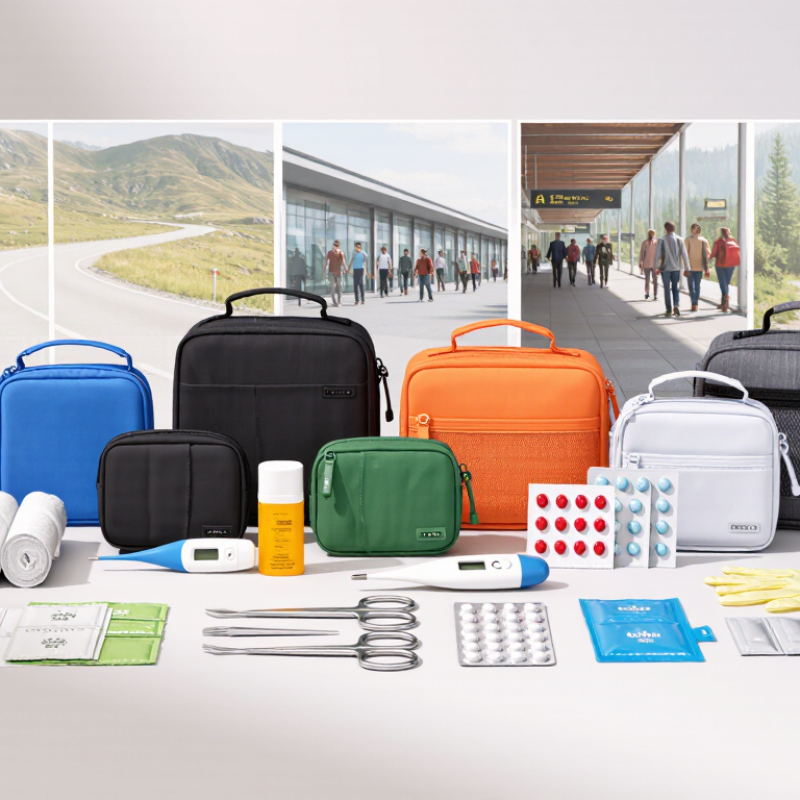
A useful travel and emergency med kit should match the trip, not a generic checklist.
My first kit was too ambitious, with bulky supplies I never touched. Now I pack only practical essentials in a waterproof pouch.
Include:
- adhesive bandages
- sterile gauze
- medical tape
- antiseptic wipes
- disposable gloves
- tweezers
- a digital thermometer
- a small flashlight
Add oral rehydration packets for hot climates or stomach illness.
Pack regular prescriptions in their original labeled containers, plus a few extra days’ supply when appropriate.
Choose medicines carefully and check with a pharmacist before traveling.
A basic kit may include pain relief, an antihistamine, motion-sickness medicine, and treatment for minor digestive problems.
Every item should have clear directions and an unexpired date.
I also carry a written list of allergies, medical conditions, prescriptions, emergency contacts, and insurance details. Keep this information on paper, not only on a phone. Batteries fail.
The destination changes the contents.
A hiking trip may require blister care, an elastic bandage, and sunscreen.
Cold weather calls for lip balm and thermal protection.
Families with children need age-appropriate products and accurate dosing tools.
Avoid loose pills in unmarked bags. They create confusion during stress.
A med kit cannot replace professional care, so learn basic first aid before departure and know where local medical services are located.
Recheck the pouch after each trip; expired supplies are easy to overlook.
How to Choose the Right Med Kit for Your Trip
Choosing the right med kit starts with your itinerary, not the packaging. A city weekend may need blister pads, antiseptic wipes, pain relief, and personal prescriptions. A remote hiking trip requires more wound dressings, elastic bandages, tweezers, oral rehydration salts, and an emergency blanket. Think about distance from medical care.
Count the travelers, too. Children, older adults, allergies, asthma, or diabetes can change the kit completely. Keep prescribed medicines in original labeled containers, with enough supply for delays. Check local travel rules before carrying medicines across borders. A small thermometer can help, but it cannot replace professional advice.
Inspect every item before leaving. Check expiry dates, sealed packaging, and instructions you understand. Place frequently used supplies near the top. Store the kit in a dry, reachable pocket, not buried under clothing. I once found that a compact kit was difficult to use because its contents were poorly organized. That was a useful lesson. Bigger is not always better. A heavy kit may stay in the hotel while you need it outdoors. Pack for realistic risks, then review the kit after each trip. Your actual needs may surprise you.
The 10 Best Med Kits for Travel and Emergencies
The best med kit depends on your destination, group size, and likely risks. A compact blister kit suits city travel and light luggage. A family kit needs extra dressings, gloves, fever care tools, and child-sized supplies. A hiking kit should include wound closures, gauze, elastic wraps, tweezers, and a cold pack. A wound-care kit focuses on cleaning and covering cuts. An allergy-aware kit should store approved personal medicines safely. A roadside kit needs reflective protection, gloves, trauma dressings, and a flashlight. A cold-weather kit benefits from thermal blankets and spare hand warmers. A beach kit needs burn care, saline, and waterproof dressings. A remote-travel kit requires more supplies because help may take longer. A daily medication kit helps organize prescribed treatments during transit.
From practical packing experience, clear compartments matter more than oversized storage. I prefer sealed pouches for dressings and a simple inventory card inside. Check expiration dates before every trip. Replace opened items immediately. A tiny pair of scissors can be more useful than several unnecessary tools. Keep medicines in original, labeled containers, and follow professional instructions. Do not add unfamiliar treatments just because online advice sounds convincing.
A kit is only useful when people can find and use it quickly. Practice opening packages with clean hands. Store it away from heat, moisture, and children. My own packing has not been perfect; I once carried duplicate tape but forgot spare gloves. That mistake changed my checklist. Reassess the kit after each journey, especially after outdoor activities or travel with children.
Comparing Med Kit Features, Uses, and Limitations
The 10 Best Med Kits for Travel and Emergencies?
A useful travel med kit should match the trip, not simply contain the most items. For city breaks, a compact kit may cover adhesive dressings, antiseptic wipes, blister protection, pain relief, and personal prescriptions. Hiking trips need stronger priorities, including elastic bandages, gauze, medical tape, tweezers, and a small emergency blanket. Weight matters. So does access.
A family kit often offers more supplies, but extra items can create confusion during stress. Clear labels, sealed compartments, and a simple contents list improve practical use. Check expiration dates before departure, especially for medicines and sterile products. I would also inspect gloves for damaged packaging and replace used items immediately. Small details matter.
Not every kit handles serious injuries. Most lack enough supplies for prolonged rescue, severe bleeding, allergic reactions, or complex fractures. A pressure bandage may help, but it cannot replace proper training or emergency care. Kits with splints may support an injured limb, yet they add bulk and require practice. Waterproof cases protect contents, although some seals eventually weaken. I once assumed a larger kit was safer; that choice made it harder to carry and easier to ignore. A short first-aid course can be more valuable than another pocket tool. Keep emergency contacts, prescriptions, and allergy information nearby. Practice using the kit before travel.
10 Best Med Kits for Travel and Emergencies? - Comparing Med Kit Features, Uses, and Limitations
| No. | Med Kit Type | Best Use | Typical Contents | Approx. Weight | Organization & Protection | Key Advantages | Main Limitations | Overall Suitability |
|---|---|---|---|---|---|---|---|---|
| 1 | Compact Travel First-Aid Kit | Short trips, sightseeing, and carry-on travel | Adhesive bandages, antiseptic wipes, gauze pads, medical tape, blister pads, tweezers, gloves, and small scissors | Approx. 250–400 g | Zippered pouch with labeled compartments; usually water-resistant, not waterproof | Lightweight, inexpensive, and easy to pack | Limited wound-care supplies; usually lacks a thermometer, medication section, and tools for serious injuries | ★★★★★ Best for everyday minor injuries |
| 2 | Family Vacation First-Aid Kit | Road trips, hotels, beaches, and family holidays | Multiple bandage sizes, children’s and adult wound dressings, cold pack, burn gel, oral rehydration supplies, gloves, and a thermometer | Approx. 500–900 g | Medium-sized case with separate medication and wound-care areas | More complete coverage for several travelers and common vacation problems | Bulkier than a personal kit; medicines may need to be purchased separately and checked for local rules | ★★★★★ Best for families |
| 3 | Hiking and Outdoor First-Aid Kit | Day hikes, camping, and remote outdoor activities | Pressure bandage, elastic wrap, blister treatment, triangular bandage, wound-closure strips, antiseptic, gloves, emergency blanket, and whistle | Approx. 450–800 g | Durable pouch with water-resistant fabric and compact internal pockets | Designed for sprains, blisters, cuts, and exposure to changing weather | May not include enough supplies for groups or trips lasting several days; does not replace first-aid training | ★★★★★ Best for outdoor recreation |
| 4 | Wilderness Medical Kit | Backpacking, remote trekking, and extended travel away from medical services | Large wound dressings, irrigation syringe, trauma shears, adhesive tape, splinting material, compression wraps, blister care, gloves, and emergency instructions | Approx. 900 g–1.8 kg | Rugged, compartmentalized case; some models include a waterproof liner | Supports more advanced stabilization and longer self-care periods | Heavy and expensive; several items require practical training and should not be used as a substitute for evacuation | ★★★★☆ Best for remote travel |
| 5 | Vehicle Emergency Medical Kit | Cars, vans, road travel, and roadside incidents | High-visibility dressings, gauze, pressure bandage, gloves, foil blanket, warning items, burn dressing, tape, and basic tools | Approx. 700 g–1.5 kg | Hard or semi-rigid case that protects contents from crushing; storage temperature should be monitored | Easy to locate during roadside emergencies and suitable for larger wounds | Heat and freezing temperatures can damage dressings, batteries, and medicines; not ideal for daily carry | ★★★★★ Best for vehicles |
| 6 | Waterproof Marine First-Aid Kit | Boating, kayaking, fishing, and wet environments | Water-resistant dressings, adhesive tape, antiseptic wipes, burn treatment, motion-sickness supplies, gloves, tweezers, and emergency blanket | Approx. 600 g–1.2 kg | Sealed or highly water-resistant container; contents should still be inspected after immersion | Protects essential supplies from splashes and high humidity | Some containers are bulky; saltwater exposure and prolonged immersion can still compromise contents | ★★★★☆ Best for water-based activities |
| 7 | Workplace and Workshop First-Aid Kit | Home workshops, garages, small offices, and light industrial tasks | Eye pads, eyewash, finger dressings, adhesive bandages, gauze, burn dressings, gloves, tape, and scissors | Approx. 800 g–2 kg | Wall-mountable or portable case with clearly labeled sections | Useful for repeated minor cuts, abrasions, eye exposure, and burns | Usually not designed for wilderness use, major trauma, or carrying in a backpack | ★★★★☆ Best for fixed locations |
| 8 | Personal Medication and Health-Management Kit | Travelers who need regular prescriptions or condition-specific supplies | Medication organizer, prescription copies, dosage record, thermometer, spare eyewear supplies, masks, hand sanitizer, and basic dressings | Approx. 200–600 g, excluding medicines | Compact organizer with separate medication compartments; should be kept dry and away from excessive heat | Helps maintain medication routines and organize important health information | Does not provide comprehensive trauma care; prescription storage and transport rules vary by destination | ★★★★★ Best for personal medical needs |
| 9 | Bleeding-Control Emergency Kit | High-risk activities, emergency vehicles, and public safety preparedness | Pressure dressings, wound packing gauze, compression wrap, trauma shears, nitrile gloves, and protective barrier equipment | Approx. 400–900 g | Compact, clearly marked pouch; some contents are vacuum-sealed for extended storage | Focused equipment for controlling severe bleeding before professional help arrives | Requires proper training; not intended for routine cuts, general illness, or independent treatment of serious injuries | ★★★★☆ Best as a specialized emergency supplement |
| 10 | Disaster and Home Emergency Medical Kit | Power outages, storms, earthquakes, and short-term household emergencies | Large dressings, gauze, antiseptic, gloves, masks, thermometer, cold pack, burn supplies, oral rehydration supplies, and basic hygiene items | Approx. 1.5–3 kg | Large organized container; should be stored in an accessible, dry, temperature-controlled location | Provides broad coverage for multiple people when normal services are disrupted | Too large for most luggage; water, prescription medicines, and specialist items may need to be added separately | ★★★★★ Best for household preparedness |
How to Pack, Maintain, and Use a Med Kit Safely
A useful travel med kit is not the largest one; it is the one you can identify quickly.
Pack adhesive dressings, sterile gauze, gloves, antiseptic wipes, tweezers, oral rehydration salts, a thermometer, and necessary personal medicines. Keep medicines in original, labeled packaging, with a written dose schedule and emergency contacts.
Separate daily medicines from shared supplies. Use a waterproof pouch, then place it where passengers can reach it.
Check seals, battery dates, medicine expiry dates, and dosage instructions before each trip. The CDC Yellow Book 2024 advises travelers to plan medicines, health documents, and destination-specific precautions before departure.
Heat can damage some products, while freezing can ruin liquids. A cool, shaded compartment works better than a parked-car dashboard.
Use gloves before touching blood, and wash hands when possible. Apply firm, continuous pressure to serious bleeding, then call local emergency services.
Do not give unfamiliar medicine to another person, especially a child, pregnant traveler, or someone with allergies. For severe symptoms, the kit is only a bridge to professional care.
Keep a brief incident note. Record what was used, when, and why. It sounds fussy. Yet this small record exposes gaps I might otherwise overlook, such as missing pediatric doses or expired antiseptic.
Related Posts
-
10 Best First Aid Products for Comprehensive Emergency Preparedness?
-
10 Essential Tips for Choosing First Aid Products for Your Home
-
What Are the Best First Aid Consumables to Buy Globally?
-
How to Choose the Best First Responder Kits for Emergency Situations?
-
Top Aid Kits for China Best Quality Supply Needs?
-
Top 10 Aid Kits in China for Global Buyers Searching for Quality?