
Blog
10 Safety Shoes Buying Tips for Global Buyers
Global buyers face a crowded safety footwear market. Product photos rarely reveal how a shoe feels after ten hours on concrete. This guide turns a broad search into practical checks for safety shoes, from fit and protection to supplier consistency. Small details matter.
Safety researcher Sidney Dekker offers a useful principle: “Safety is not the absence of accidents, but the presence of capacity.” For buyers, that means matching footwear to real tasks, not just selecting the boldest protection claim. A warehouse picker may need different features from a welder or a construction worker. Consider toe protection, slip resistance, puncture-resistant soles, water exposure, and the weight employees carry through each shift. Then check product documentation and markings against the requirements of each destination market. Requirements can differ. Confirm them before ordering.
Fit deserves equal attention. Ask for size charts, test samples with work socks, and inspect heel hold, toe room, and sole flexibility. Have workers try the shoes on their actual floors, if possible. A hard tile aisle reveals different problems than a wet loading bay. Ask about materials, replacement parts, lead times, and batch-to-batch consistency. Request clear answers in writing.
We can overvalue a low price; that shortcut deserves a second look. A cheap pair that causes discomfort may sit unused, while a well-matched shoe can support steady wear. No checklist catches everything. Use these ten buying tips to ask better questions, compare evidence, and choose safety shoes suited to the people who will wear them.
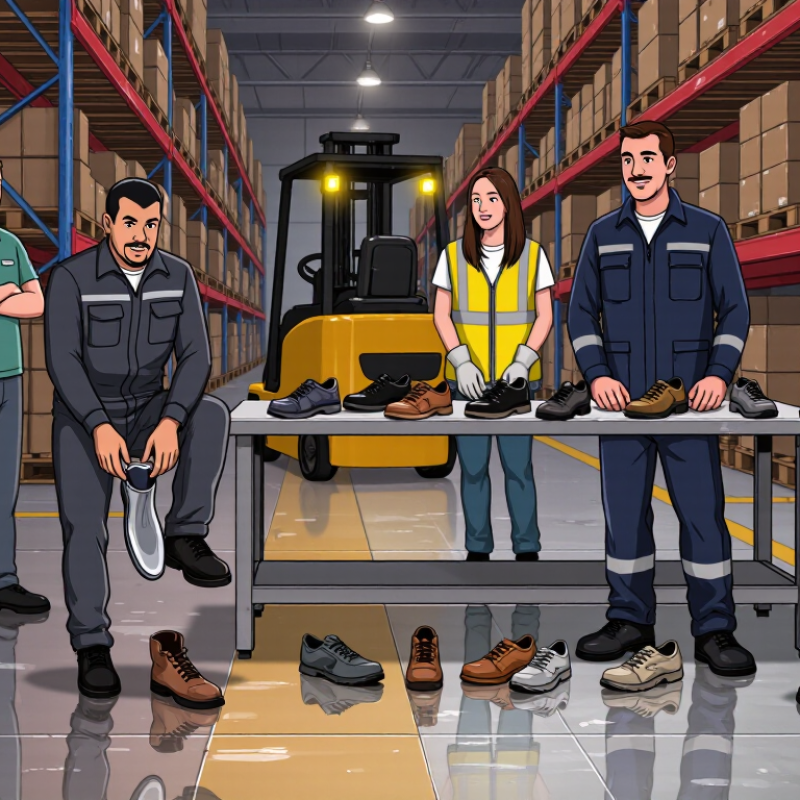
Identify Workplace Hazards and Required Protection
Before buying safety shoes, identify what workers actually encounter during a shift. Check for falling tools, sharp scrap, slippery floors, hot surfaces, or exposed electrical risks. A warehouse aisle with loose shrink wrap needs different protection from a wet food-processing floor. Small details matter. Ask workers and supervisors where near misses happen; paperwork alone may miss the puddle beside a loading bay.
Tips: Match each hazard to a specific feature. Choose toe protection for impact or compression risks, puncture-resistant soles where sharp debris is present, and slip-resistant outsoles for wet or oily surfaces. For electrical, chemical, or heat exposure, confirm that the shoe’s documented rating covers the actual task. No single shoe suits every workplace.
Check local requirements before placing a large order, since standards and accepted test methods vary by market. Then confirm sizing, fit, and comfort with a trial pair worn during a normal shift. Look for pressure at the toes, heel movement, and fatigue after several hours. A certified shoe can still be a poor fit. That part is easy to overlook. Reassess protection when duties, floor conditions, or equipment change, and ask workers what fails in daily use.
Check Regional Safety Standards and Certifications
For global buyers, a safety shoe is suitable only when its certification matches the destination market and workplace hazards. A logo on a product page is not enough. Request the relevant declaration or test report, and check the standard number, laboratory, model name, and issue date. Europe commonly references EN ISO 20345, while the United States uses ASTM F2413. Canada and Australia/New Zealand have separate requirements. Check the current standard edition and local purchasing rules before ordering in volume. Details matter.
Match the documents to the exact shoe being purchased, including its sole, toe cap, and other protective features. A certificate for one model may not cover a similar-looking version. Check whether the documented protection suits the actual task: a warehouse floor, for instance, may require different features from a site with sharp debris. Ask who issued the evidence and verify it where possible. This takes time. It can feel overly cautious, especially when deadlines are tight, but paperwork alone cannot confirm comfort or fit. Test samples with the socks workers will wear, and review the choice if they cause pressure or slipping.
Choose the Right Shoe Type, Fit, and Materials
“10 Safety Shoes Buying Tips for Global Buyers”
Choose the Right Shoe Type, Fit, and Materials
Match the shoe to the actual hazard, not just the job title. A toe cap helps protect against impact and compression; a puncture-resistant sole suits work around sharp debris. For wet floors, prioritize tested slip resistance. The U.S. Bureau of Labor Statistics reported 2.6 million nonfatal workplace injuries and illnesses in private industry in 2023. That broad figure does not measure footwear performance, but it shows why site-specific risk checks matter. Check that protective claims match recognized test requirements, such as ASTM F2413, where applicable.
Fit can make a protective shoe hard to wear. Try it on with the socks used at work, ideally late in the day when feet may be larger. Leave room for toes to move, while keeping the heel secure on stairs. No pinching. Check both feet; one may be wider. A common buying mistake is choosing extra length to solve a width problem, which can cause slipping. If possible, test a pair on the actual floor surface before ordering in volume.
Choose materials for the environment. Leather may suit abrasion-prone tasks, while breathable textiles can help in warm, dry settings. For oils, moisture, or cleaning chemicals, verify resistance against the specific exposure; “water-resistant” does not mean chemical-proof. Ask suppliers for test reports, sizing details, and care limits. Then review the choice with workers after a trial period. Their feedback may challenge the specification—and that is useful.
10 Safety Shoes Buying Tips for Global Buyers - Choose the Right Shoe Type, Fit, and Materials
| No. | Buying Tip | What to Check | Why It Matters | Practical Buyer Action |
|---|---|---|---|---|
| 1 | Match the shoe type to the job | Consider the work surface, hazards, tasks, and whether footwear needs to be low-cut, mid-cut, or a boot. | Different jobs expose workers to different risks; a shoe suited to warehouse floors may not suit outdoor construction work. | Map each role to its hazards before choosing a product category. Do not select footwear by appearance alone. |
| 2 | Confirm the required safety standard | Check the applicable market and workplace requirements, such as EN ISO 20345 in many markets or ASTM F2413 in the United States. | Standards define test methods and performance requirements, but requirements and accepted markings can vary by destination and use. | Ask for current conformity documentation and verify the exact standard, edition, markings, and product model required by the buyer or regulator. |
| 3 | Select the right toe protection | Choose safety-toe footwear when impact or compression hazards are present. Compare the tested protection level and toe-cap design. | Toe protection helps reduce injury risk from falling or rolling objects, but it does not make footwear suitable for every hazard. | Base the choice on a workplace risk assessment. Check that the toe cap does not create uncomfortable pressure during normal movement. |
| 4 | Get the fit right | Check length, width, heel hold, toe room, and fit while wearing the socks used at work. | Poor fit can cause discomfort, blisters, and reduced stability, which may affect safe movement during a shift. | Measure both feet later in the day when they may be slightly larger. Allow comfortable toe movement without excessive heel slip. |
| 5 | Choose materials for the working environment | Compare leather and textile uppers, linings, and construction for durability, breathability, water exposure, and cleaning needs. | Materials affect comfort, service life, and suitability for the conditions in which the shoes will be worn. | For wet or dirty tasks, check the product’s stated water-resistance properties and care instructions; do not assume every leather shoe is waterproof. |
| 6 | Evaluate outsole grip and wear | Review the outsole compound, tread pattern, and any slip-resistance claims relevant to the intended floor conditions. | Grip depends on the floor, contaminants, wear, and test conditions; no outsole can guarantee slip prevention in every situation. | Request test information relevant to the target market and trial footwear on representative surfaces where practicable. |
| 7 | Check puncture protection when needed | Determine whether the job involves nails, sharp debris, or other underfoot penetration risks, and confirm the footwear’s tested protection. | Puncture-resistant inserts may differ in material, coverage, flexibility, and performance. | Compare the declared protection and coverage for the exact model. Do not treat puncture protection as protection against every sharp object. |
| 8 | Consider heat, cold, and moisture | Assess temperature, ventilation, insulation, water exposure, and expected time outdoors. | Footwear that is too warm, too cold, or slow to dry can reduce comfort during long shifts. | Choose features for the actual climate and task, and confirm that any thermal or water-related claims are supported by product documentation. |
| 9 | Review weight and all-day comfort | Compare shoe weight, cushioning, flexibility, fastening, and compatibility with any required insoles. | Workers may wear safety footwear for many hours; comfort and mobility can influence consistent use. | Arrange wear trials with representative users and check fit with approved socks or orthotic insoles before placing a large order. |
| 10 | Plan sizing, care, and replacement | Check the size range, fit consistency, cleaning guidance, inspection points, and signs of damage or excessive wear. | Protective performance can be affected by damage, worn soles, or changes to the footwear. | Request a size chart and care guidance. Establish regular inspections and replace footwear when it is damaged or no longer meets workplace needs. |
Buyer note: Select safety footwear through a workplace hazard assessment and verify the current requirements for the destination market. Product claims and protection levels should be confirmed for the exact model being purchased.
Assess Comfort, Durability, and Essential Features
Comfort starts with fit, not a product sheet. Check toe room, heel hold, and pressure across the widest part of the foot. Try shoes with the socks workers normally wear, ideally late in the day when feet may be slightly swollen. Fit matters. A toe cap should protect without pressing against the toes. Ask for samples when possible, and have workers walk on the actual floor surface. A poor fit can make even a well-specified shoe difficult to wear through a full shift.
Durability depends on the job and the conditions. Inspect stitching, outsole bonding, and the points where the upper bends. Flex the shoe gently and look for early creasing or separation. Check the seams. In wet or oily work areas, confirm that the outsole is suited to those surfaces; “slip-resistant” is not a guarantee on every floor. Heavier materials may last longer, but they can also increase fatigue. That trade-off is easy to underestimate.
Match protective features to specific hazards rather than choosing every available option. Toe protection, puncture-resistant midsoles, and electrical protection serve different needs. Ask suppliers for test documentation and verify that the footwear meets the requirements applicable to the destination market and workplace. Small details count. Compare sizing charts carefully across regions, and record feedback from wearers after a trial period. Their comments may reveal a hot spot or stiff heel that a specification sheet misses.
Verify Supplier Reliability, Documentation, and Total Cost
When assessing a safety-shoe supplier, request its business registration, factory address, and a named quality contact. Check that contact through an independent channel, not only a messaging app. Ask for recent production photos or arrange a factory audit when the order size justifies it. Small detail: do the cartons, labels, and sample show the same model code? They should. Request current test reports and declarations for the exact shoe construction, including the sole, toe cap, and slip-resistance features. A report for a similar model is not enough. Confirm dates, the issuing laboratory, and traceable report numbers. Paperwork can look convincing. Verify it.
Before paying a deposit, agree in writing on approved materials, size range, inspection criteria, defect handling, and delivery milestones. Keep a sealed reference sample; it helps when bulk goods arrive slightly different. Compare stitching, sole bonding, insole markings, and carton counts during pre-shipment inspection. No checklist catches everything. My first draft of a cost estimate often misses retesting or replacement freight, so leave room for these. Compare total cost, not just unit price: include samples, tooling, inspection, freight, duties, storage, and likely warranty claims. Ask suppliers to separate each charge and state payment terms. A cheap quote may become expensive after delays, inconsistent sizing, or rejected batches.
10 Safety Shoes Buying Tips for Global Buyers — Verify Supplier Reliability, Documentation, and Total Cost
A useful documentation check is confirming that the footwear’s toe-protection rating matches the applicable standard. The chart compares the impact-energy requirements for safety footwear and protective footwear.
Buyer note: EN ISO 20345 safety footwear requires 200 J toe-cap impact protection; EN ISO 20346 protective footwear requires 100 J. Ask suppliers for valid test reports and certificates that identify the product model and applicable standard. Confirm the current requirements for your destination market.