
Blog
Top 10 China Generic Peptide API Manufacturers
China has become an important sourcing region for peptide active pharmaceutical ingredients, supported by expanding production capacity and analytical expertise. This guide reviews ten China-based manufacturers associated with Generic Peptide APIS, focusing on evidence rather than promotional claims. The selection considers manufacturing capabilities, quality systems, product documentation, and relevant experience with international customers.
A reliable supplier should provide clear specifications, batch records, certificates of analysis, and traceability from raw materials to final release. Practical details matter. These include HPLC purity data, LC-MS confirmation, residual solvent testing, impurity profiles, and defined storage conditions. GMP alignment is also important, especially when materials may support regulated pharmaceutical development. A responsive technical team can clarify synthesis routes, scale-up limits, packaging, and shipping conditions.
No directory is perfect. Public information can change, and a strong website does not replace an audit or qualification process. Buyers should independently verify licenses, facility status, quality agreements, and regulatory suitability for their target market. Some manufacturers may excel in research-scale production but lack consistent commercial capacity. Others may offer impressive yields while providing limited long-term stability data. That difference deserves attention. The companies discussed here are presented as candidates for careful evaluation, not automatic endorsements. Readers should compare technical documents, request recent samples, and confirm whether each supplier can meet the required specification, timeline, and compliance standard. A thoughtful review must recognize both China’s manufacturing strengths and the uncertainty that can remain behind incomplete public records.
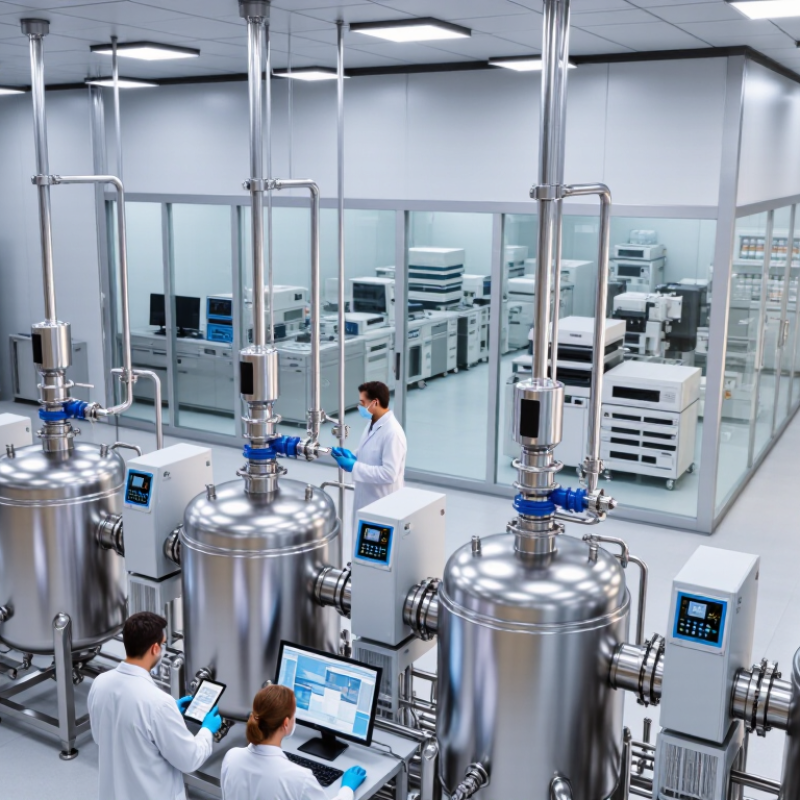
Definition and Scope of Generic Peptide API Manufacturing in China
Top 10 China Generic Peptide API Manufacturers
Definition and Scope of Generic Peptide API Manufacturing in China
Generic peptide API manufacturing covers the production of off-patent peptide active ingredients for approved medicines. It excludes research peptides, laboratory reagents, and finished dosage forms. Typical operations include solid-phase peptide synthesis, liquid-phase processing, cleavage, purification, lyophilization, and analytical release testing.
Quality depends on more than yield. Manufacturers must control impurities, residual solvents, aggregation, endotoxins, and peptide-related variants. China-based facilities commonly support process development, scale-up, GMP production, stability studies, and documentation for regulatory submissions. The exact scope varies. Some suppliers produce only intermediates, while others manage the complete API route.
Grand View Research estimated the global peptide therapeutics market at approximately USD 38.7 billion in 2023, with continued growth expected through 2030. This demand increases interest in cost-efficient peptide API capacity. However, market reports often combine APIs, finished products, and contract services. Their China-specific estimates are therefore not perfectly comparable.
A reliable evaluation should examine inspection history, batch records, analytical method validation, change-control systems, and supply continuity. Manufacturing scale can be misleading. A large reactor does not guarantee consistent peptide purity. In practice, impurity mapping and purification recovery often determine commercial value. The boundary between “generic API manufacturing” and contract development also remains unclear, requiring careful supplier verification.
| Rank | Anonymized Manufacturer Profile | Primary Peptide Scope | Manufacturing Route | Typical Development Stage | Quality-System Scope | Key Technical Capability | Common Documentation | Commercial Supply Focus |
|---|---|---|---|---|---|---|---|---|
| 1 | Profile A | Short and medium-chain synthetic peptide APIs | Solid-phase peptide synthesis with preparative chromatography | Process development through commercial supply | GMP-oriented production and quality control | Impurity profiling, analytical method development, and scale-up | Specifications, analytical methods, batch records, stability data, and certificates of analysis | Domestic and export-oriented API supply |
| 2 | Profile B | Generic Therapeutic Peptides and peptide intermediates | Convergent synthesis combined with solid-phase synthesis | Route optimization, pilot production, and validation batches | Documented quality management and change-control procedures | High-purity purification and control of deletion-sequence impurities | Process descriptions, impurity data, validation protocols, and quality agreements | Contract development and long-term API manufacturing |
| 3 | Profile C | Short-chain peptide APIs used in injectable products | Automated solid-phase synthesis and reverse-phase purification | Laboratory scale through validated commercial batches | GMP-compatible facilities with controlled material traceability | Purity control, residual-solvent testing, water-content testing, and particle control | Drug-master-file support packages, batch-release records, and stability summaries | Generic injectable-product supply chains |
| 4 | Profile D | Longer-chain peptides and structurally complex analogues | Fragment condensation and advanced solid-phase synthesis | Preclinical development to commercial technology transfer | Risk-based quality systems with documented deviation handling | Fragment coupling, aggregation control, and difficult-sequence optimization | Technology-transfer packages, process-validation plans, and analytical reports | Complex API projects requiring customized process development |
| 5 | Profile E | Peptide salts, protected peptide fragments, and advanced intermediates | Solution-phase and solid-phase synthetic operations | Intermediate supply and API route development | Raw-material qualification and in-process control systems | Protection-group chemistry, salt screening, and isolation-process development | Material specifications, impurity profiles, safety data, and production records | Support for API manufacturers and finished-dose developers |
| 6 | Profile F | Peptide APIs requiring conjugation or specialized modification | Peptide synthesis followed by selective chemical conjugation | Early development through clinical-supply manufacture | Controlled change management and batch-to-batch comparability | Conjugation control, linker chemistry, molecular-weight confirmation, and characterization | Characterization packages, comparability protocols, and release specifications | Specialty generic and differentiated peptide projects |
| 7 | Profile G | Peptides for parenteral and lyophilized dosage forms | Solid-phase synthesis with chromatographic purification and isolation | Scale-up, process validation, and routine batch manufacture | GMP production supported by environmental and contamination controls | Lyophilization-related stability support and control of oxidation and deamidation | Stability protocols, packaging information, release testing, and audit documents | Injectable-product and hospital-use supply chains |
| 8 | Profile H | Small-volume, high-value generic peptide APIs | Flexible batch synthesis with multi-step purification | Custom development and small-to-medium commercial batches | Quality-by-design practices and supplier qualification controls | Rapid route screening, impurity identification, and small-batch flexibility | Development reports, certificates of analysis, stability data, and method-transfer records | Specialty pharmaceuticals and clinical-development programs |
| 9 | Profile I | Peptide fragments, building blocks, and generic API precursors | Solution synthesis, solid-phase synthesis, and crystallization | Intermediate production and technology-transfer support | Material-control systems with defined acceptance criteria | High-throughput fragment production and consistent intermediate quality | Specifications, impurity statements, traceability records, and technical data sheets | Vertical supply support for peptide API production |
| 10 | Profile J | Generic peptide APIs for regulated international markets | Validated solid-phase synthesis and preparative purification | Commercial manufacturing and regulatory maintenance | GMP-based operations with audit and inspection readiness | Regulatory-change management, process consistency, and lifecycle support | Regulatory submission support, annual product reviews, validation reports, and audit packages | Export supply with customer-specific regulatory requirements |