Blog
2026 Top Satin Sleep Mask Manufacturers for Global Buyers
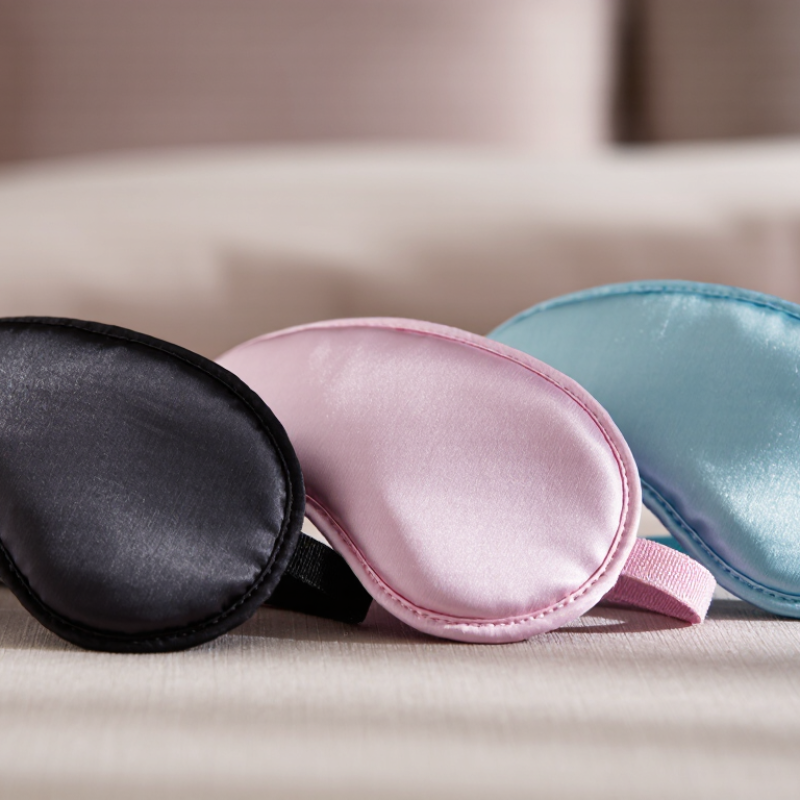
The 2026 global sleep-accessory market is moving beyond basic comfort. Buyers now examine fabric quality, supplier reliability, testing records, and responsible production. A Satin Sleep Mask sits at this intersection. It touches the skin, blocks bedroom light, and represents a brand’s quality promise.
Grand View Research and Fortune Business Insights report continued growth in sleep-related consumer products, wellness accessories, and home-comfort categories. However, sleep-mask figures vary because some reports combine satin, silk, cotton, and synthetic products. That limitation matters. Market numbers should guide decisions, not replace supplier verification.
Dr. Rebecca Robbins, a sleep scientist and associate professor at Harvard Medical School, has stated, “Sleep is not a luxury; it is a biological necessity.” Her principle explains why buyers increasingly assess mask fit, breathability, light coverage, and pressure around the eyes. A glossy surface alone is not enough.
The leading manufacturers in 2026 should demonstrate more than attractive product photography. Global buyers need clear fiber descriptions, measurable dimensions, colorfastness testing, packaging controls, and dependable production capacity. OEKO-TEX documentation may support material-safety evaluation, while independent audits can strengthen supply-chain confidence. Yet certifications differ in scope. Buyers must check issuing bodies, validity dates, and tested product details.
Small defects become visible quickly. Uneven elastic, loose stitching, or strong chemical odors can damage customer trust. Some supplier claims also deserve closer review.
This guide introduces leading Satin Sleep Mask manufacturers for international buyers. It considers product engineering, customization, minimum order quantities, lead times, quality systems, and communication practices. The strongest choice may not be the cheapest factory. It may be the supplier that explains its limitations clearly.
Satin Sleep Masks: Materials, Features, and Main Product Types
Satin sleep masks are gaining attention as buyers seek softer, darker sleep environments. Grand View Research reports that the global sleep mask market is expanding as sleep-health awareness and travel demand increase. Satin usually means a smooth weave, not a specific fiber. Polyester satin offers lower cost and strong color retention, while silk satin feels cooler and more breathable. This distinction matters during supplier audits.
Material specifications should be clear. Buyers can request fiber percentages, fabric weight, seam samples, and colorfastness results. A dense outer layer can block light effectively, but excessive padding may create pressure around the eyes. Adjustable elastic improves fit across different head sizes. However, tight straps can leave marks after several hours. Small details matter.
The main product types include flat sleeping masks, contoured masks, padded masks, cooling masks, and travel sets. Flat designs fold easily and suit promotional orders. Contoured versions create space around the eyelids, though their shaping is harder to standardize. Cooling styles may use gel inserts or breathable lining, but gel adds weight and raises leakage concerns. The 2023 Global Wellness Institute report places sleep within the wider wellness economy, which continues to influence product development. Still, wellness claims require restraint. A mask can reduce light; it cannot guarantee deeper sleep. That wording is easy to overlook.
How to Evaluate Satin Sleep Mask Manufacturers in 2026
Choosing a satin sleep mask manufacturer requires more than comparing catalog prices. Request physical samples before discussing large orders. Check the fabric’s smoothness, stitching, elastic recovery, and edge finishing by hand. A reliable supplier should provide fiber composition, fabric weight, color references, and washing instructions. Ask whether these details remain consistent across production batches.
Factory experience matters. Review documented quality procedures, production capacity, inspection records, and typical defect rates. A live factory tour can reveal storage conditions, cutting accuracy, and packing practices. It is useful to ask for recent test reports, but do not accept them blindly. Confirm the testing laboratory, sample date, and matching product specifications. Small differences can matter.
Communication is equally important. Evaluate how quickly the manufacturer answers technical questions and handles sample revisions. Ask for a clear quotation covering tooling, packaging, shipping terms, minimum quantities, and lead times. One mistake I have seen is judging reliability from polished photos. Photos cannot show loose threads, uneven padding, or delayed replies. Request a pilot order with written acceptance standards. Then record defects, packaging damage, and delivery performance. A supplier may appear efficient during sampling, yet struggle during seasonal demand. That gap deserves careful attention.
2026 Top Satin Sleep Mask Manufacturers for Global Buyers - How to Evaluate Satin Sleep Mask Manufacturers in 2026
Anonymous supplier-evaluation benchmark for global buyers. The figures below are practical target ranges and verification points for comparing satin sleep mask manufacturers without displaying company or brand data.
| Evaluation Dimension | Recommended 2026 Benchmark | What Buyers Should Verify | Why It Matters | Priority |
|---|---|---|---|---|
| Satin Fiber Composition | Polyester satin, recycled polyester satin, or silk satin with composition clearly stated | Request fiber-content test reports and confirm that the product description, packaging, and customs documents use the same composition. | Satin describes the weave or surface structure, not necessarily the fiber. Fiber composition affects price, care, softness, durability, and labeling requirements. | High |
| Fabric Weight | Approximately 80–140 g/m² for lightweight satin sleep-mask shells | Confirm fabric weight through a laboratory report or production sample, and specify an acceptable tolerance in the purchase agreement. | Fabric weight influences opacity, drape, comfort, sewing stability, and perceived quality. | Medium |
| Mask Dimensions | Common adult size: approximately 19–22 cm wide and 8–10 cm high | Check the finished dimensions after sewing, including seam allowance, elastic attachment, nose contour, and dimensional tolerance. | A suitable shape should cover light without creating excessive pressure or gaps around the nose and cheeks. | High |
| Elastic Strap Construction | Soft covered elastic with adjustable or size-appropriate tension; no exposed sharp hardware | Inspect recovery after repeated stretching, attachment strength, edge comfort, and whether the strap leaves pressure marks during extended wear. | The strap is a major source of customer complaints, especially when tension is inconsistent between batches. | High |
| Light-Blocking Performance | Full facial coverage with minimal light leakage under normal indoor and travel conditions | Use a repeatable inspection method with a fixed light source, test multiple samples, and assess leakage around the nose bridge and lower edge. | Light blocking is the primary functional requirement of a sleep mask and should not be judged only from product photographs. | High |
| Colorfastness | Testing against applicable ISO or AATCC colorfastness methods; no visible staining or unacceptable shade change after care testing | Request test conditions for washing, rubbing, perspiration, and water exposure. Match approved color standards with production lots. | Color transfer and fading can damage customer trust and may create claims when the mask contacts skin, bedding, or clothing. | High |
| Chemical Safety | Materials suitable for skin contact and compliant with the destination market's restricted-substance requirements | Ask for current laboratory reports covering relevant restricted substances, dyes, heavy metals, formaldehyde, and other applicable requirements. | Compliance obligations vary by destination. A generic safety declaration is not equivalent to an independent test report. | High |
| OEKO-TEX or Equivalent Textile Certification | Valid certification for the actual fabric or finished product, where required by the buyer's market | Verify certificate scope, product class, validity period, certificate holder, and whether the supplied material is covered. | Certification can support chemical-safety claims, but its scope must match the exact material and product being purchased. | Medium |
| Quality Management System | Documented incoming inspection, in-process inspection, final inspection, and corrective-action procedures | Review inspection checklists, defect classifications, sample-retention practices, and batch traceability records. | A documented system is more reliable than a visual factory tour or a general claim of “strict quality control.” | High |
| Defect-Control Method | Clearly defined acceptance criteria for stains, snags, loose threads, seam puckering, broken stitches, and uneven elastic | Agree on approved samples, critical defects, major defects, minor defects, inspection level, and acceptable quality limits before production. | Written criteria reduce disputes and make inspection results consistent across suppliers and shipment lots. | High |
| Customization Capability | Custom color, size, label, packaging, embroidery, printing, and fabric options supported with pre-production approval | Request a development timeline, artwork requirements, sample charges, color-matching process, and confirmation of minimum order quantities. | Customization affects development risk, lead time, packaging compliance, and total landed cost. | Medium |
| Sampling Process | Pre-production sample, revised sample when necessary, and signed or digitally approved reference sample | Confirm sample lead time, sample-to-bulk consistency controls, and whether the approved sample is retained for final inspection. | A documented approval sample provides an objective reference for workmanship, color, dimensions, and materials. | High |
| Typical Production Lead Time | Approximately 15–30 calendar days after approval for standard repeat orders; longer for custom materials | Separate material procurement, sample approval, production, inspection, packing, and export-document timelines. | Quoting only a sewing time can produce unrealistic delivery promises and stock-out risk. | Medium |
| Minimum Order Quantity | Often lower for stock fabric and standard construction; higher for custom fabric, custom dyeing, or special packaging | Obtain separate MOQs for each color, size, logo method, packaging format, and material type. Confirm whether mixed-color orders are allowed. | MOQ is a commercial condition, not a fixed industry standard, and can change substantially with customization. | High |
| Packaging and Retail Readiness | Individually protected, clean, moisture-controlled packaging with compliant labels and carton markings | Approve packaging artwork, product dimensions, language requirements, barcode placement, carton quantity, and drop-test expectations where applicable. | Packaging affects hygiene, presentation, warehouse handling, shipping efficiency, and marketplace compliance. | Medium |
| Export Documentation | Commercial invoice, packing list, transport documents, origin information, and product-specific compliance documents when required | Check document accuracy, HS-code support, country-of-origin details, carton marks, and the supplier's ability to meet the destination market's requirements. | Correct documentation helps prevent customs delays, classification problems, and avoidable landed-cost changes. | High |
| Sustainability Evidence | Traceable recycled content or responsible-material documentation when sustainability claims are made | Request transaction certificates, chain-of-custody records, recycled-content evidence, and precise claim wording for packaging and marketing. | Environmental claims should be supported by evidence and should not imply broader certification than the documentation covers. | Medium |
| Supplier Communication | Written responses within one business day during sampling and production-management stages | Evaluate technical English, response completeness, escalation procedures, change-control discipline, and reporting of delays or defects. | Fast and accurate communication reduces specification errors and improves response time when production issues occur. | Medium |
| Pre-Shipment Inspection | Independent or buyer-authorized inspection before shipment, based on agreed sampling and defect criteria | Specify inspection timing, sample size, measurement points, functional checks, packaging checks, and the action required if results fail. | Inspection before shipment provides a final opportunity to identify defects before international freight is released. | High |
| Commercial Evaluation | Compare total landed cost rather than unit price alone | Include product price, sampling, tooling, packaging, testing, inspection, freight, duties, payment terms, defect allowance, and replacement policy. | The lowest quoted unit price may not provide the lowest total cost after compliance, logistics, and quality risks are included. | High |
Buyer note: Benchmark ranges are intended for supplier screening and should be confirmed through product samples, current test reports, approved specifications, and destination-market requirements before placing a production order.
Top Satin Sleep Mask Manufacturers for International Buyers
For international buyers, choosing a satin sleep mask manufacturer requires more than comparing prices. The Global Wellness Institute reported that the wellness economy reached $6.3 trillion in 2023. This growth supports demand for comfortable, travel-friendly sleep accessories. Satin masks should feel smooth, remain breathable, and block light without pressing the eyes. Buyers should inspect stitching, elastic recovery, fabric weight, and colorfastness through physical samples. Digital photos are not enough.
Material responsibility also matters. Textile Exchange’s 2024 Materials Market Report estimated global fiber production at 124 million tonnes in 2023. Polyester remains widely used, but buyers should request recycled-content evidence when sustainability claims appear. Reliable manufacturers can provide test records, production samples, carton details, and clear lead-time estimates. Requirements may differ across markets, so testing should match the destination country. A low price can hide weak packaging or inconsistent sizing. That mistake is common.
Tips: Ask for three samples from separate production batches. Measure the mask after washing. Check whether the elastic twists, the lining sheds, or the dye transfers onto pale fabric. Confirm minimum order quantities, inspection procedures, and replacement terms in writing. For international shipments, request multilingual care labels and moisture-resistant packaging. One practical warning remains: even a polished sample may not represent full production quality. Independent inspection is often worth the added cost.
2026 Top Satin Sleep Mask Manufacturers for Global Buyers
Typical product dimensions used in international sourcing briefs for satin sleep masks. These reference measurements help global buyers compare product specifications without ranking individual companies or brands.
Reference values are shown in centimeters and represent commonly specified dimensions for export-oriented satin sleep mask products. Actual specifications may vary by design, target market, and customization requirements.
Private Label, Customization, and Minimum Order Requirements
Global buyers are treating satin sleep masks as a focused wellness product, not a simple accessory. Grand View Research estimates the global sleep mask market could grow at about 5.7% annually through 2030. This demand supports private label programs, but supplier selection still requires factory evidence.
Private label buyers should request fabric composition, color cards, packaging drawings, and a pre-production sample. Satin may use polyester or silk, and the difference affects hand feel, cost, and care instructions. Custom options include embroidered logos, adjustable straps, pouch sets, gift boxes, and printed inserts. A practical sample should be tested for seam pressure, elastic recovery, dye transfer, and light blocking. Small details matter.
Minimum order quantities vary widely. Stock colors may begin near 100–300 pieces, while custom fabric, woven labels, or printed packaging often require 500–1,000 pieces. These figures are market observations, not guarantees. Confirm them in writing. Mordor Intelligence identifies Asia-Pacific as a major production and consumption region for sleep-related textiles, yet location alone does not prove quality. Ask for recent inspection records, textile safety test reports, production lead times, and clear defect policies. A low MOQ can hide higher unit costs. That assumption sometimes fails. A cheaper quote may also exclude sampling, packaging, freight preparation, or revisions. Reliable manufacturers explain every charge before approval.
Global Sourcing, Quality Control, and Shipping Considerations
2026 Top Satin Sleep Mask Manufacturers for Global Buyers
Global sourcing begins with a clear product brief, not a quick price request. Specify satin fiber content, mask dimensions, filling, elastic recovery, stitching, and packaging. Ask manufacturers for recent production photos and sample records. A low quotation may hide weaker fabric or inconsistent sizing. It often does.
Quality control should follow the product through several checkpoints. Inspect fabric color under neutral lighting, because showroom lamps can disguise shade differences. Test the strap after repeated stretching and check whether seams press comfortably against the face. For larger orders, use a pre-production sample, a mid-production inspection, and a final random check. Keep measurement tolerances written in the purchase agreement. In my experience, verbal promises create avoidable disputes. Still, inspection plans are not perfect; one checked carton cannot represent every unit.
Shipping decisions affect real costs. Confirm carton dimensions, gross weight, labeling, and moisture protection before booking freight. Satin masks are light, but bulky retail boxes can increase chargeable volume. Compare sea, air, and rail options according to urgency and destination handling. Request a packing list that matches the commercial invoice exactly. Allow time for port delays, customs questions, and warehouse receiving. A practical buffer is safer than promising an aggressive delivery date. Track samples and bulk orders separately. Small details matter.