Top 10 Breathable Shirt Types for Global Buyers?
Choosing the right Breathable Shirt can be difficult for global buyers. Climate, fabric weight, fit, and production quality all affect comfort. A shirt that feels airy in London may feel too warm in Singapore. The reverse can also happen.
This guide explores ten practical shirt types for different markets and daily uses. It considers linen, cotton, bamboo blends, mesh panels, seersucker, performance fabrics, and other breathable constructions. Each option will be reviewed through fabric composition, moisture movement, air circulation, durability, and care requirements. Small details matter. A loose weave may improve airflow, while a poor seam can reduce comfort during long wear.
Buyer experience remains important. Samples should be checked under realistic conditions, including warm rooms, outdoor movement, repeated washing, and extended packing. Product specifications should also be verified through reliable supplier documentation and suitable textile testing. Terms such as “cooling” or “natural” can sound convincing, but they need evidence. Marketing claims are not enough.
There is no universal best shirt.
A breathable fabric may wrinkle easily. A synthetic blend may dry faster but feel less natural. Some lightweight shirts also lose shape after repeated washing. These trade-offs deserve honest attention before bulk purchasing. By comparing the ten shirt types carefully, global buyers can make more informed decisions for retail collections, uniforms, travel clothing, and seasonal product lines. Trends may change, but comfort, consistency, and dependable quality remain essential.
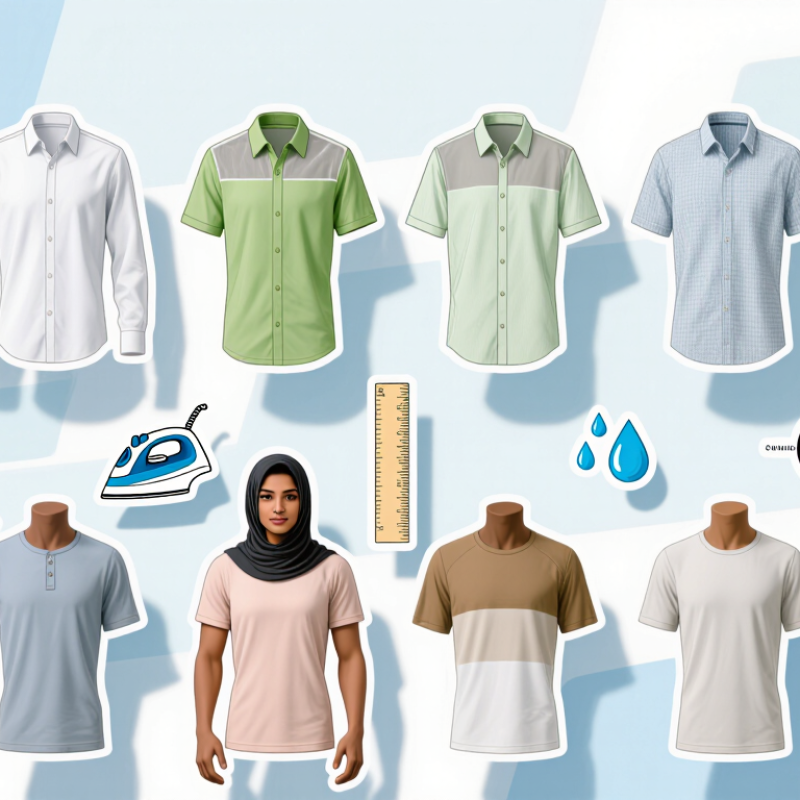
What Makes a Shirt Breathable: Fabrics, Weaves, and Airflow
For global buyers, breathable shirts depend on more than a lightweight label. Linen, cotton poplin, seersucker, chambray, hemp, madras, mesh, piqué, viscose, and lyocell each manage heat differently. Textile Exchange’s 2024 Materials Market Report estimates that global fiber production reached 124 million tonnes in 2023. Polyester represented about 57%, while cotton accounted for approximately 19%. Fiber choice matters, but construction often decides comfort.
Open weaves create larger air channels. Seersucker lifts fabric away from the skin, while mesh maximizes airflow through visible openings. Plain-weave linen dries quickly because its irregular yarns leave small ventilation gaps.
Cotton poplin feels crisp, though dense versions may trap heat. Piqué adds textured passages, but heavy structures can become warm. Lyocell and viscose absorb moisture well, yet wet fabric may cling.
Look for air-permeability testing under ISO 9237, not vague “cooling” claims. The test measures airflow through a defined fabric area under controlled pressure. Results still need context. A shirt with excellent airflow may offer weak sun protection or poor durability. The Global Organic Textile Standard’s 2023 Market Report also shows growing demand for certified fibers, but certification alone does not prove breathability. Check yarn count, fabric weight, weave openness, and finishing treatments together. A practical sample test helps: hold the cloth near a small fan, then wear it for fifteen minutes in warm conditions. It is imperfect, but supplier descriptions can be imperfect too.
Natural-Fiber Shirt Types for Hot and Humid Climates
Top 10 Breathable Shirt Types for Global Buyers?
Natural-Fiber Shirt Types for Hot and Humid Climates
Hot climates reward airflow, quick drying, and loose construction. The strongest natural-fiber choices include linen camp-collar shirts, linen overshirts, cotton voile shirts, cotton gauze shirts, seersucker shirts, madras shirts, cotton chambray shirts, hemp-cotton shirts, ramie shirts, and lightweight organic cotton poplin shirts. Their open weaves create space between skin and fabric. Linen feels crisp and cool, while gauze feels softer against damp skin. Ramie is strong, but it can feel rough without careful finishing.
Material data also deserves attention. Textile Exchange’s 2024 Materials Market Report estimates global fiber production reached 124 million tonnes in 2023. Cotton represented roughly one-fifth of that volume. This scale supports reliable sourcing, but it does not guarantee comfort. A dense cotton shirt may feel hotter than a lighter linen shirt. That detail is easy to miss.
For global purchasing teams, request fiber percentages, fabric weight, weave details, shrinkage results, and colorfastness reports. A 90–130 gsm fabric often suits tropical shirting, although local testing remains necessary. The European Environment Agency’s 2024 textile analysis links longer product use with lower environmental pressure. Therefore, durability matters alongside breathability. Hemp-cotton blends can offer strength and airflow, but their hand feel varies considerably. Fit also changes performance. Loose sleeves help ventilation; tight armholes trap heat. Some “breathable” samples still become clammy after repeated washing. That is a useful warning.
Key Buying Factors for Global Buyers: Fit, Quality, and Compliance
Top 10 Breathable Shirt Types for Global Buyers
For global buyers, breathability starts with the fabric, but fit decides daily comfort. Linen, cotton voile, seersucker, poplin, and lightweight jersey remain practical shirt options. The Textile Exchange Materials Market Report 2024 states that polyester represented about 59% of global fiber production in 2023, while cotton accounted for roughly 19%. Polyester can dry quickly, yet poor construction may trap heat. Buyers should request air-permeability results, not rely on fiber names alone. ASTM D737 testing offers a measurable comparison between fabrics.
Fit requires equal attention. A breathable shirt needs shoulder ease, sleeve mobility, and enough room across the chest. Oversized patterns may improve airflow but can weaken a professional appearance. Slim patterns may look sharper but restrict movement in humid conditions. Size charts should include body measurements, garment measurements, and tolerance limits. Fit samples should be tested on different body shapes. One model is not enough.
Quality checks should include seam strength, pilling, colorfastness, and shrinkage after washing. ISO 5077 supports dimensional-change testing, while ISO 105 methods assess colorfastness. Compliance is market-specific. Chemical restrictions, fiber labeling, care instructions, and children’s product rules may differ by destination. REACH requirements apply in the European market, while other regions use separate textile regulations. A certificate is useful, but not conclusive. I would not treat one laboratory report as proof of long-term quality. Some buyers still under-test light colors and printed sections. That is an avoidable weakness.
Top 10 Breathable Shirt Types for Global Buyers
Key buying factors for global buyers: fit, quality, and compliance
Fit Check ease, shoulder width, sleeve shape, and size grading across target markets. Loose cuts usually improve airflow.
Quality Evaluate fabric weight, weave density, colorfastness, shrinkage, seam strength, and performance after washing.
Compliance Confirm fiber labeling, care labels, restricted-substance requirements, product safety rules, and destination-market documentation.
The chart uses representative moisture-regain values for common textile fibers at standard atmospheric conditions. Higher moisture regain can support moisture management, but actual shirt breathability also depends on fabric construction, weight, finishing, fit, and ventilation.