
Blog
Why Choose a Lightweight Hardtail Mountain Bike?
Choosing a lightweight hardtail mountain bike is not merely a weight-saving decision. It changes how the bicycle responds beneath you. A lighter frame accelerates more easily, climbs with less effort, and feels sharper when steering around roots. The absence of a rear shock also reduces mechanical complexity. That simplicity can matter on long rides, remote trails, and muddy weekends.
Industry data supports this practical interest in cycling. The Outdoor Industry Association’s 2024 Outdoor Participation Trends Report identifies bicycling as a major outdoor activity in the United States. PeopleForBikes’ 2024 U.S. Bicycle Industry Overview also shows continued attention to bicycle participation, product value, and rider access. These reports cover cycling broadly, not hardtails alone. That limitation deserves attention. A popular category is not automatically the best choice for every rider.
From hands-on trail experience, a lightweight hardtail mountain bike often rewards smooth technique. On a rocky climb, you may feel the rear tire stay connected while your hands remain relaxed. On a fast descent, however, the rigid rear end can transmit sharper impacts. Tire pressure, frame material, suspension fork quality, and riding skill become critical. Lightweight is helpful, but it is not magic. Some riders may prefer additional rear suspension for comfort, control, or aggressive terrain. The real question is more specific: where will you ride, how far will you travel, and how much feedback can your body manage? This guide examines those trade-offs through efficiency, durability, maintenance, cost, and trail performance.
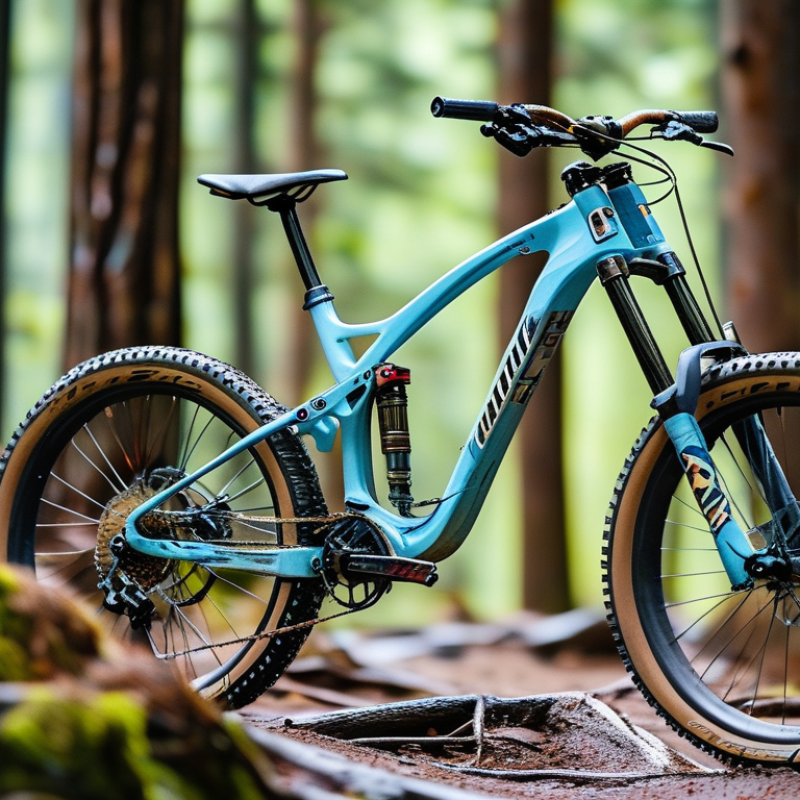
What Defines a Lightweight Hardtail Mountain Bike
Why Choose a Lightweight Hardtail Mountain Bike?
A lightweight hardtail mountain bike has a rigid rear triangle and front suspension. It removes the weight, maintenance, and movement of a rear shock. A typical trail hardtail often weighs around 10–13 kilograms, depending on frame material, wheel size, and equipment. Weight alone does not define it.
Frame stiffness matters. So does the suspension fork, wheel strength, tire casing, and braking system. A 100–120 mm fork can absorb roots and loose stones without making the bike feel dull on climbs. The UCI Cycling Regulations set a 6.8-kilogram minimum for competition bicycles, but that figure is not a sensible target for everyday mountain trails. Trail reliability needs stronger wheels and wider tires. Lighter is not always better.
The 2024 Outdoor Participation Trends Report from the Outdoor Industry Association recorded 175.8 million American outdoor participants in 2023. That broad participation shows why practical, accessible bikes matter. A lightweight hardtail can make a steep fire road feel less punishing, especially when lifting the front wheel over a rock. In my experience, every kilogram becomes noticeable after repeated climbs. Still, I once chose an overly light tire setup and regretted it on sharp gravel. The definition needs balance.
A useful definition includes efficient climbing, controlled handling, and enough durability for real terrain. It should feel lively, not fragile. That distinction is easy to miss.
Why Choose a Lightweight Hardtail Mountain Bike? - What Defines a Lightweight Hardtail Mountain Bike
| Data Dimension | Typical Lightweight Hardtail Specification | What It Means on the Trail | Why It Matters |
|---|---|---|---|
| Complete Bike Weight | Approximately 9.5–12.5 kg, depending on frame size, materials, wheels, drivetrain, and equipment | The bike feels easier to lift, carry, accelerate, and maneuver | Lower overall mass can reduce effort during climbs, transport, and frequent changes of direction |
| Frame Construction | Commonly an aluminum alloy or carbon-fiber hardtail frame with no rear suspension linkage | The frame provides direct power transfer from the pedals to the rear wheel | A rigid rear triangle reduces mechanical complexity, weight, and maintenance requirements |
| Rear Suspension | None; the rear wheel is connected directly to the frame | Pedaling input is transmitted efficiently on smooth climbs and firm surfaces | Eliminating the rear shock and linkage generally saves weight and simplifies setup |
| Front Suspension Travel | Approximately 100–130 mm on many cross-country and trail-oriented designs | The fork absorbs impacts from roots, rocks, braking bumps, and uneven ground | Front suspension adds control and comfort while keeping the design lighter than a full-suspension bike |
| Wheel Size | Most commonly 27.5 or 29 inches | Smaller wheels can feel agile, while larger wheels roll over obstacles more easily | Wheel size affects handling, rolling efficiency, frame fit, and total bike weight |
| Tire Width | Approximately 2.1–2.4 inches for many lightweight cross-country and trail setups | Moderate-width tires balance grip, puncture protection, rolling speed, and weight | Narrower or faster-rolling tires can improve efficiency, while wider tires offer more traction and comfort |
| Drivetrain Configuration | Often a single front chainring with a wide-range rear cassette, such as 10–12 speeds | The rider can select low gears for climbs and higher gears for flatter sections | A single-chainring system reduces parts, shifting complexity, and potential maintenance points |
| Climbing Performance | Efficient on sustained climbs, fire roads, smooth singletrack, and firm technical ascents | More of the rider’s pedaling effort is directed toward forward motion | A light frame and rigid rear end can make repeated elevation gains less tiring |
| Handling and Agility | Typically responsive, with geometry designed for cross-country or light-trail riding | The bike changes direction quickly and feels manageable at lower speeds | Lower mass and fewer moving suspension components can make technical positioning easier |
| Braking System | Hydraulic or mechanical disc brakes, commonly with rotors around 160–180 mm | Disc brakes provide controlled stopping in dry and wet conditions when properly maintained | Reliable braking improves confidence on descents and helps manage speed on varied terrain |
| Energy Efficiency | Generally efficient on paved connectors, gravel, smooth trails, and long climbs | Less suspension movement and lower weight can make steady-distance riding feel less demanding | The design suits riders who value speed, distance, and efficient pedaling over maximum impact absorption |
| Maintenance Requirements | Fewer suspension components than a full-suspension mountain bike | Routine care focuses on the fork, drivetrain, brakes, tires, wheels, and frame | A simpler layout can reduce service time and long-term maintenance complexity |
| Carrying and Storage | Usually easier to lift onto a vehicle rack, carry upstairs, or store in a small space | Lower weight improves everyday convenience before and after a ride | Practical handling encourages more frequent use and makes transport less strenuous |
| Best-Suited Terrain | Cross-country routes, gravel paths, forest roads, moderate singletrack, and rolling terrain | Performs best where efficient pedaling is as important as obstacle control | It is a versatile choice for riders who do not regularly tackle large drops or highly rough downhill trails |
| Limitations | Less rear-wheel impact absorption and traction than a comparable full-suspension design | Rough descents may feel harsher and require more active body positioning | Riders should match the bike to their terrain, riding style, speed, and comfort preferences |
Specifications are representative ranges for lightweight hardtail mountain bikes; actual values vary according to frame size, materials, component selection, and intended use.