
Blog
What Is Sports Strapping Tape Used For?
Sports strapping tape is used to support body parts during sport, restrict certain movements, and help athletes feel more secure. It is commonly applied around ankles, wrists, thumbs, and fingers. A coach might tape an ankle before practice, while a clinician may use it to limit a specific motion after assessing an injury. The purpose depends on the tape and the person wearing it.
Rigid tape holds firmly and can reduce movement in a targeted direction. Elastic sports strapping tape stretches more, allowing greater freedom while offering light support. Some tape also secures padding or helps protect skin from rubbing. A practical example is a strip placed around the heel to reduce friction inside a new pair of boots. Small details matter. Tape should sit smoothly, without wrinkles or excessive tightness. Numbness, tingling, unusual color changes, or increasing pain are reasons to remove it and seek appropriate advice.
Tape is not a cure, and it cannot reliably prevent every injury. Its usefulness depends on correct application, fit, activity, and the person’s condition. That distinction can be easy to miss when athletes see tape as a quick fix. It is better viewed as one support tool, not a substitute for assessment, rehabilitation, or sound training decisions. In the sections ahead, we’ll look at common uses, tape types, application basics, and situations where professional guidance is sensible.
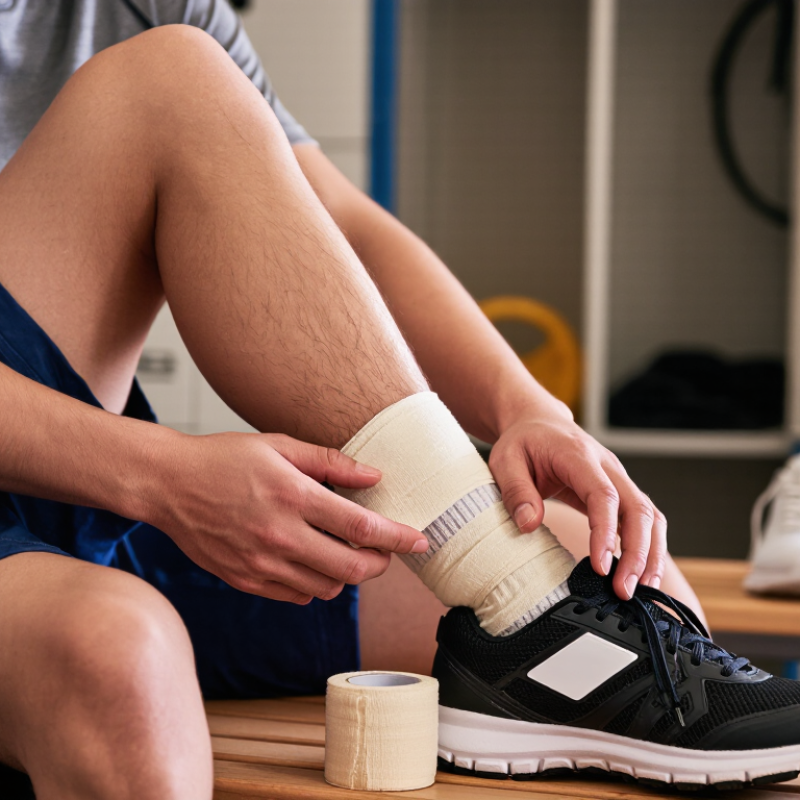
What Sports Strapping Tape Is: Rigid Athletic Tape and Elastic Kinesiology Tape
Sports strapping tape generally means two different tools: rigid athletic tape and elastic kinesiology tape. Rigid tape stretches very little. Applied around an ankle or wrist, it can limit a specific movement and provide external support during activity. Elastic tape moves with the skin and is often used to offer a light sensory cue without restricting normal motion. They are not interchangeable.
Evidence for elastic tape is mixed. A 2014 systematic review in the Journal of Physiotherapy examined 12 trials involving 495 participants. It found only limited support for meaningful benefits across musculoskeletal conditions. That matters: a colorful strip may feel reassuring, but it should not be treated as a proven fix or a substitute for rehabilitation. Not magic.
In practice, tape choice depends on the injury, the sport, and how much movement needs limiting. A clinician or athletic trainer can check application and fit. Rigid tape should feel supportive, not numb or painfully tight; remove it if skin becomes irritated. Elastic tape can wrinkle over a moving knee, especially after sweat, so placement matters. I’d also question any claim that one taping method works equally well for every athlete.
What Is Sports Strapping Tape Used For? — Rigid Athletic Tape and Elastic Kinesiology Tape
| Feature | Rigid Athletic Tape | Elastic Kinesiology Tape |
|---|---|---|
| What it is | A strong, non-elastic tape designed to hold an area in a set position. | A flexible, stretchable tape designed to move with the skin and body. |
| Main purpose | Helps limit or control joint movement and can provide external support during sport. | Provides a flexible application that generally allows a broad range of movement. |
| Common applications | Often used to support or restrict movement around areas such as the ankle, wrist, thumb, or fingers. | Often applied to muscles or joints when a person wants support without fully restricting movement. |
| Effect on movement | Can limit specific movements when applied correctly; overly tight or restrictive taping can be uncomfortable. | Stretches with movement and is not intended to immobilize a joint. |
| Typical sports use | May be used before activity to help support an area that needs movement control. | May be used during activity when a flexible tape application is preferred. |
| What it cannot do | Does not repair an injury or replace diagnosis, rehabilitation, or medical care. | Does not guarantee pain relief or improved performance; research findings for specific benefits are mixed. |
| Safe-use basics | Apply without restricting circulation. Remove it if there is numbness, tingling, increased pain, or a change in skin color. | Apply to clean, dry skin and avoid irritated or damaged skin. Remove it if itching, burning, or a rash develops. |
| Choosing between them | Consider when movement restriction or firmer external support is the goal; technique and fit matter. | Consider when a more flexible application is the goal; it should not be treated as a substitute for joint stabilization. |
Note: The right tape and application depend on the activity, body area, and individual needs. Seek advice from a qualified healthcare professional for an injury, persistent symptoms, or uncertainty about safe taping.
Related Posts
-

Why Use Sport Tape for Injury Prevention and Recovery?
-
Why Do Sports Teams Need First Aid Kits?
-

What Are the Best First Aid Consumables to Buy Globally?
-
China Best Ice Packs Supplier for Global Buyers?
-
Best First Aid Kits for Sports Teams What to Look For?
-
What Are First Aid Ice Packs and How Do They Work?