Blog
Top Sports Kits Suppliers for Global Buyers
Global buyers need more than a low price when choosing sports kits suppliers. They need consistent sizing, dependable delivery, and fabrics suited to real training conditions. A youth football club may need durable shirts that survive weekly washing, while a school may prioritize clear size ranges and reliable repeat orders. These practical differences shape a useful supplier shortlist.
Bill Bowerman, the renowned track coach and Nike co-founder, is widely associated with the words, “If you have a body, you are an athlete.” That inclusive idea is a useful lens for evaluating sports kits: good products should serve different ages, abilities, climates, and budgets. Buyers can compare fabric weight, stitching, colorfastness, customization options, sample quality, and communication before placing a large order. Details matter. A polished catalog cannot prove that every shipment will match the sample. Ask about production timelines, quality checks, and how suppliers handle sizing or printing issues. Then test samples with the people who will wear them. That step takes time, but it can reveal uncomfortable seams or colors that fade after washing.
This guide examines suppliers for global buyers through those everyday purchasing questions, not marketing claims alone. No shortlist is perfect. Regional delivery limits, changing costs, and uneven product information can complicate comparisons. Treat rankings as a starting point, verify current details directly, and choose a supplier whose strengths fit your team’s needs.
Understanding the Role of Sports Kit Suppliers in Global Markets
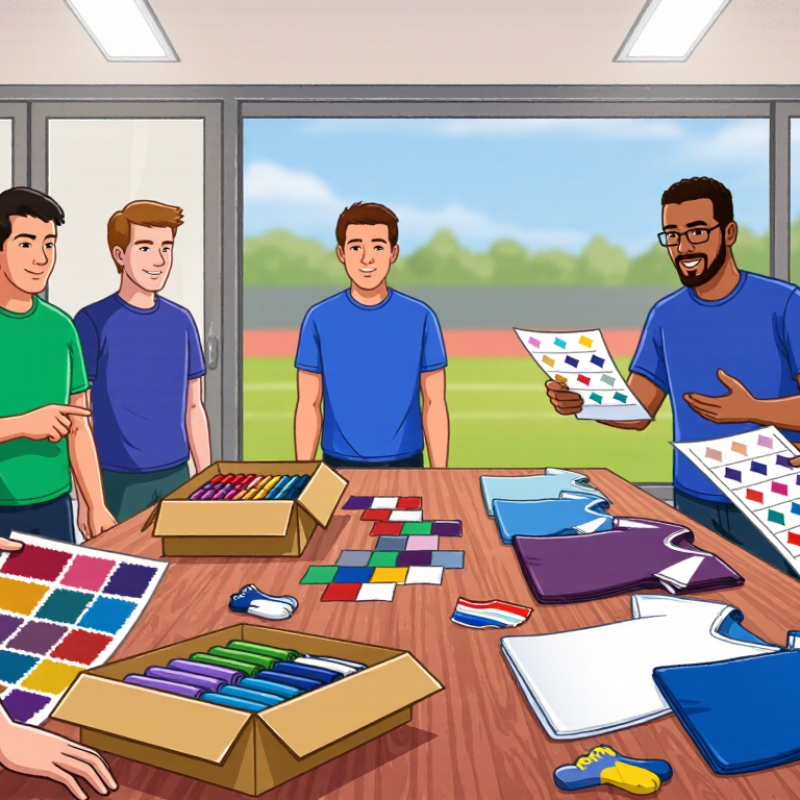
Sports kit suppliers connect clubs, schools, and retailers with manufacturers, fabric mills, and freight services across different markets. Their role includes more than placing production orders. They help buyers specify materials, size ranges, colors, and delivery dates before a season begins. A clear specification can prevent practical problems, such as mismatched shades or shirts that fit differently across a youth size range.
Good suppliers also manage quality checks and communication. Buyers may request fabric samples, inspect stitching, and confirm printed details before approving a larger run. They should ask how measurements are checked and how defects are handled. Small checks matter. A late shipment can leave teams without kits for opening week, especially when several production steps happen in different countries. Lead times need room for delays.
Global markets bring varied climates, budgets, and expectations. Lightweight, quick-drying fabric may suit hot training conditions, while colder regions may need layered pieces. Suppliers can explain available options, but buyers should verify performance claims and test samples where possible. Forecasting is another useful service: reviewing past order volumes can reduce excess stock, though forecasts are rarely perfect. Plans change. Clear records of approvals, quantities, and shipment milestones make coordination easier when they do. A few details are still easy to miss, and suppliers and buyers both need to review them.
Core Products and Customization Options Offered by Suppliers
Global sports kit suppliers commonly provide match jerseys, shorts, training tops, tracksuits, socks, and lightweight warm-up jackets. The right product mix depends on climate, sport, and how often teams train. For example, mesh panels can improve airflow during summer sessions, while brushed inner fabric adds warmth to travel layers. Fit matters. Ask suppliers for size charts with garment measurements, not just age labels. A sample jersey can reveal whether sleeves restrict movement or seams rub under the arms.
Customization may include team colors, player names, numbers, sleeve patterns, and embroidered or printed badges. Suppliers can often adjust collars, cuffs, fabric weight, and panel placement too. Send clear artwork files and confirm how colors are matched across different materials. Small details count. Before approving a bulk order, check a physical sample for print alignment, stitching, and fabric feel. Also request a written production specification, including size tolerances and delivery milestones. Custom options can add cost or time, and more decoration does not always make a kit better. A simple design may be easier to replace consistently, though that trade-off is easy to overlook.
How Sports Kits Are Designed, Manufactured, and Quality-Checked
Sports kits begin with the athlete’s movement, not just a color palette. Designers map stretch zones, seams, and ventilation to the sport, then test paper patterns against real body measurements. A collar that rubs during repeated turns can matter more than a striking print. Small details matter. Fabric choice also affects cost, durability, and environmental impact. Textile Exchange’s Materials Market Report 2024 estimates global fiber production reached 124 million tonnes in 2023, with polyester accounting for 57%. That scale makes fiber traceability and clear material specifications important when buyers compare suppliers.
Manufacturing teams turn approved samples into size-graded patterns, cutting plans, and sewing instructions. During production, checks can cover fabric weight, color consistency, seam strength, and logo placement. Quality teams may use methods such as ASTM D4966 for fabric abrasion resistance and AATCC 8 for color transfer from rubbing. Results should be recorded by fabric lot and garment size, not judged by appearance alone. Finished kits also need fit checks after washing, since shrinkage can change sleeve length or waistband tension. A lab pass is useful, but it cannot guarantee comfort in every climate or training session. That gap deserves honest attention.
Criteria for Comparing Suppliers Across Regions
Top Sports Kits Suppliers for Global Buyers
Comparing suppliers across regions starts with a consistent brief. Specify fabric weight, stitching, decoration method, size range, order quantity, and delivery date. Then request quotations against the same details. Otherwise, a low unit price may hide different materials or omitted services. Details matter. Ask for size charts with garment measurements, not just labels such as “large.” Fit can vary by market, and a chart alone may not reveal how fabric behaves after washing. Review a physical sample for seams, color consistency, print placement, and comfort during movement. Record requested changes in writing.
Check how each supplier manages production, quality, and communication. Request a production schedule, sample approval steps, and recent inspection records, with clear definitions of acceptable defects. Ask who handles problems if a shipment misses a milestone. Compare delivered cost, including freight, duties where applicable, and packaging, rather than comparing factory prices alone. Shipping estimates can shift during busy periods, so build in a practical buffer. Not always easy. Regional experience is useful, but it should not replace evidence: verify the scope and dates of certificates or audit documents. One common oversight is treating fast replies as proof of reliable production. A short video call from the workshop can help, but it is only one piece of evidence.
Top Sports Kits Suppliers for Global Buyers — Criteria for Comparing Suppliers Across Regions
Regional profiles below describe common sourcing patterns, not guarantees about individual suppliers. Capabilities, costs, minimum order quantities and delivery schedules vary by factory, product specification and order size.
| Supplier Region | Common Sportswear Capabilities | Material & Supply-Chain Considerations | Logistics Considerations | Compliance Checks for Buyers | Potential Best Fit |
|---|---|---|---|---|---|
| East Asia (e.g., China, Japan, South Korea) |
Broad range of cut-and-sew apparel, performance fabrics, trims and garment-finishing options; capabilities differ substantially between countries and factories. | Established textile and component networks can support complex fabric, printing and embellishment requirements. Confirm whether nominated fabrics and trims are made locally or sourced elsewhere. | Major manufacturing and container-shipping hubs are available, but transit time and freight cost depend on the specific port, destination and shipping method. | Request product-specific testing, restricted-substance documentation, traceability records and evidence that the factory can meet the destination market’s labeling rules. | Buyers seeking a wide choice of product and material options, subject to factory-level verification. |
| South Asia (e.g., India, Pakistan, Bangladesh) |
Significant apparel manufacturing capacity, including knitted and woven garments. Capabilities in technical fabrics and performance finishes should be checked for each supplier. | Cotton and knitwear are important parts of the region’s textile and garment industries. For synthetic performance kits, verify fabric specifications, colorfastness and moisture-management claims with test reports. | Export routes and schedules vary by country, port, season and destination; include customs clearance and inland transport when comparing delivered lead times. | Assess workplace safety, labor practices, subcontracting controls and applicable destination-market requirements through current records and independent verification where appropriate. | Buyers comparing larger apparel programs or cotton-based components, with technical performance validated separately. |
| Southeast Asia (e.g., Vietnam, Indonesia, Thailand) |
Apparel assembly and sportswear production are available across the region, with factory expertise ranging from basic teamwear to more technical garment construction. | Upstream fabric and trim availability is not uniform. Ask for the fabric mill, country of origin, composition and evidence of capacity for repeat orders. | Export access varies by country and destination. Compare door-to-door schedules rather than relying only on factory production estimates. | Check factory authorization for subcontracting, quality-control procedures, social-compliance documentation and destination-specific product testing. | Buyers seeking to compare apparel manufacturing alternatives and diversify sourcing across multiple countries. |
| Europe (e.g., Portugal, Italy, Türkiye) |
Suppliers may offer garment development, technical construction and shorter-distance production for European buyers; product range and scale vary by location and factory. | Access to regional textile mills and finishing services differs across suppliers. Confirm fabric origin, available performance features and repeat-order continuity. | Geographic proximity can simplify sampling and communication for European buyers, although actual delivery depends on production capacity, transport mode and customs arrangements. | For goods placed on the EU market, verify applicable chemical, product-safety and textile-labeling obligations; request supporting documentation for the specific products. | Buyers prioritizing proximity to European markets, development support or smaller production runs where offered. |
| North America (e.g., United States, Mexico) |
Domestic and nearshore suppliers may support teamwear, uniforms and selected performance-apparel programs. Available capacity and specialist processes vary widely. | Some programs use regionally sourced materials, while others rely on imported fabrics or components. Confirm origin claims and component availability before placing repeat orders. | Nearshore production may reduce distance to some North American buyers, but border procedures, transport mode and factory location affect final delivery schedules. | Check applicable U.S. or Canadian labeling and product rules for the destination. For children’s products sold in the United States, assess relevant children’s-product safety requirements. | Buyers valuing regional communication, replenishment planning or proximity to North American distribution. |
| Central & South America (e.g., Mexico, Brazil, Peru) |
Regional suppliers include knitwear and garment manufacturers, but sportswear specialization, scale and technical finishing capabilities are supplier-specific. | Local fiber or textile availability may be an advantage for certain products, while other fabrics and trims may need to be imported. Verify mill details and material specifications. | Suitability depends on the buyer’s destination, available routes and applicable trade arrangements. Compare total landed cost, not factory price alone. | Review product testing, origin documentation, social-compliance evidence and destination-market labeling requirements for each order. | Buyers exploring regional supply options or products that benefit from locally available materials. |
Ordering, Shipping, and Compliance in International Sourcing
For global sports kit buyers, a reliable order starts with a clear specification. List fabric composition, sizing, colors, logos, and packaging in one approved document. Ask for a pre-production sample, then check stitching, print placement, and measurements before authorizing bulk production. Small details matter. Keep written records of revisions and approval dates; memory is a poor substitute when several teams are ordering different sizes.
Agree on quantities, production milestones, and shipping terms before paying a deposit. Request a realistic dispatch window and confirm which documents will accompany the shipment, such as the commercial invoice and packing list. For delivery planning, compare air and ocean freight against your deadline, budget, and order volume. Delays happen. Build in extra time for customs processing and last-mile delivery, especially before a tournament or school season. Ask for tracking updates and a named contact who can resolve shipment questions.
Compliance requirements vary by destination and product type. Check applicable textile-labeling, product-safety, and import documentation rules with qualified local advisers or customs professionals. Confirm that labels match the actual materials and care instructions, and review any required certificates before production begins. A supplier’s assurance is useful, but it is not a substitute for independent verification. I have seen how an overlooked label detail can create avoidable rework; buyers should check requirements early and keep the process documented.
Top Sports Kits Suppliers for Global Buyers: Ordering, Shipping, and Compliance
Incoterms® 2020 provides 11 rules for defining delivery responsibilities in international trade. Seven apply to any mode or modes of transport, while four are specifically for sea and inland waterway transport.
When ordering sports kits internationally, buyers and suppliers should agree on the appropriate Incoterms rule in the sales contract and confirm who handles transport, costs, and delivery responsibilities. Source: International Chamber of Commerce, Incoterms® 2020.
Related Posts
-
Top 10 Sports Kits Every Athlete Should Have in Their Gear Collection?
-
Best First Aid Cool Packs for Your Emergency Kit Needs?
-
China Top 10 Sports First Aid Tips You Need to Know?
-

What Are the Best First Aid Consumables to Buy Globally?
-

How to Choose First Aid Kits for Vehicles?
-

Top 10 First Aid for Sport Essentials Every Athlete Should Know?